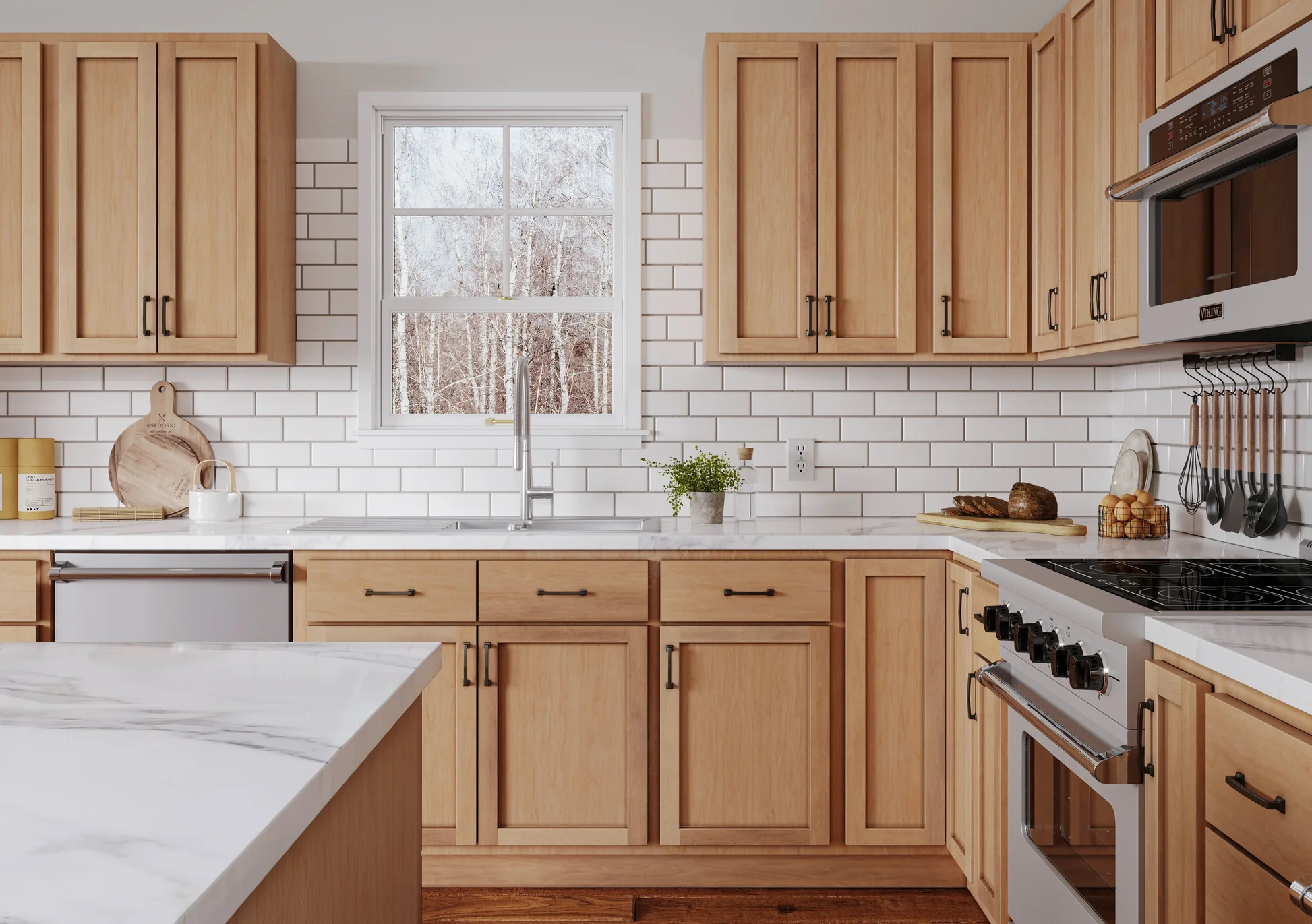
A cabinet door that sags every time you open it is more than a minor annoyance. Loose kitchen cabinet hinges are one of the most common repair calls homeowners deal with, and the good news is that most cases can be fixed without replacing the whole cabinet. This guide covers why hinges loosen, how to repair them the right way, and what keeps the fix from failing again in a few months.
Kitchen cabinets open and close dozens of times a day. That repeated motion puts steady stress on the hinge screws, and over months or years, that stress adds up. Understanding the root cause matters, because tightening a screw only solves the problem if the screw was the actual issue.
Every time a cabinet door swings open, the weight of the door pulls slightly on the screws holding the hinge in place. Over time this constant motion loosens the threads inside the wood. This is the single most common reason cabinet door hinges start to wobble or sag.
Kitchens deal with steam, humidity, and temperature swings more than almost any other room in the house. Wood expands and contracts with moisture, and that movement can gradually loosen the grip around a hinge screw. This is especially common near the stove, sink, or dishwasher.
Larger or solid wood cabinet doors put more strain on hinges than lighter doors do. If a door was installed with too few hinges or hardware rated for a lighter load, the extra weight speeds up wear. This often shows up as a door that sags on one side more than the other.
A few warning signs usually show up before a hinge fails completely. The door may not close flush with the frame anymore, or you might notice a visible gap along one edge. Squeaking, sticking, or a door that swings open on its own are also common early signs.
Catching these signs early makes the repair simpler. A hinge caught while it is just loose usually only needs tightening, while a hinge left alone for months can lead to stripped screw holes or a cracked door panel.
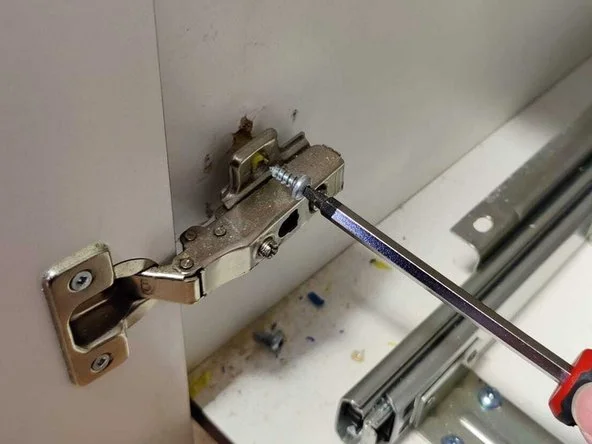
Most loose hinge problems fall into one of three categories: loose screws, stripped holes, or misaligned adjustable hinges. Each one has a different fix, so it helps to identify which situation you are dealing with before grabbing tools.
Start with the simplest fix. Open the door, hold it level, and use a screwdriver to tighten each hinge screw. If the screw spins freely without gripping, the hole is likely stripped and needs a different repair method rather than more tightening.
A stripped hole no longer holds the screw threads properly. A common fix is filling the hole with wood glue and toothpicks or wooden matchsticks, letting it dry fully, then trimming flush and re-drilling. For a longer-lasting repair, threaded wood inserts give the screw something solid to bite into again.
Many modern kitchens use concealed cabinet door hinges that adjust with small screws instead of full removal. These European-style hinges typically have depth, height, and side-to-side adjustment screws built in. A quarter turn on the right screw can often fix a door that hangs crooked without touching the mounting screws at all.
Not every hinge is worth saving. If the metal is bent, rusted, or the hinge mechanism itself has worn out, replacing the hardware is usually faster and more reliable than repeated repairs. This is also a good time to consider soft close cabinet hinges, which reduce slamming and slow the closing motion for a quieter kitchen.
If several doors across the kitchen are showing the same wear at once, it may point to a bigger issue than one bad hinge. Homeowners planning a kitchen remodeling project often replace all the hardware at once, since fresh hinges pair naturally with new cabinet doors, fronts, or finishes.
When replacing hardware, matching the hinge type and size to your existing cabinet hardware hinges matters. A mismatched hinge can throw off the door alignment even when it is installed correctly, so it helps to bring the old hinge along when shopping for a replacement.
A repaired hinge can still loosen again if the underlying cause was never addressed. A few habits make a real difference in how long a fix lasts.
Checking hinge screws every few months catches loosening before it becomes a bigger repair. Wiping down hinges to remove kitchen grease buildup keeps moving parts working smoothly, since grime attracts dust and can slow the hinge mechanism over time. Using a slightly longer or thicker screw during any repair also gives better grip than replacing like for like.
For doors that see heavy daily use, adding an extra hinge distributes the weight more evenly and reduces strain on any single mounting point. This is a small adjustment that often prevents the same door from becoming a repeat problem.
A wobbly door is easy to ignore until it stops closing altogether or the wood around the hinge splits. Ruiz Remodeling & Painting handles cabinet door repair, hinge replacement, and full cabinet hardware upgrades for homeowners throughout Amarillo, TX. Whether it is a single sagging door or a full set of kitchen cabinet hinges that need attention, our team can assess the damage and recommend the right fix instead of a temporary patch.
We also help homeowners considering broader kitchen cabinet refacing or painting projects who want their hardware to match a refreshed look. If your cabinet doors are sagging, sticking, or swinging open on their own, it is worth having them looked at before the screw holes strip out completely or a hinge fails mid-use.
Call Ruiz Remodeling & Painting at +1 (806) 640-4422 to schedule a cabinet hinge repair or ask about our kitchen cabinet services in Amarillo and the surrounding area. A quick fix now can save a bigger repair later.
Upgrade your space with expert home remodeling services. We deliver quality work, on time and within budget.